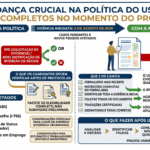


Matter of Delcarmen-Lara overturns a 2012 precedent and changes the risk analysis for individuals who have accrued unlawful presence in the United States
Updated August 14, 2026
A decision published by the Board of Immigration Appeals (BIA) on August 13, 2026, substantially changed a rule that, for nearly 14 years, had been part of the immigration planning of thousands of people in the United States.
In Matter of Milagro Delcarmen-Lara, 29 I&N Dec. 830 (BIA 2026), Interim Decision #4233, the BIA held that travel outside the United States with Advance Parole may be considered a “departure” — a departure from the United States — for purposes of the unlawful presence bar under the Immigration and Nationality Act (INA).
In doing so, the BIA expressly overruled Matter of Arrabally and Yerrabelly, 25 I&N Dec. 771 (BIA 2012), which for more than a decade had held that a temporary departure under Advance Parole did not constitute the “departure” necessary to trigger the unlawful presence ground of inadmissibility.
The change is especially relevant to individuals with:
- a pending Adjustment of Status application;
- DACA;
- Temporary Protected Status (TPS);
- certain humanitarian cases;
- a history of entry without inspection;
- overstay;
- prior periods without lawful status;
- or any situation in which there may have been more than 180 days of unlawful presence.
However, there is one essential distinction:
Being out of status does not automatically mean that a person has accrued unlawful presence.
That difference may determine whether travel with Advance Parole is relatively safe or whether it may create an extremely serious immigration consequence.
What Is Advance Parole?
Advance Parole is a travel authorization granted by the Department of Homeland Security, generally through USCIS, that allows certain individuals who are in the United States to request advance authorization to travel abroad and later present themselves at a port of entry to request parole back into the United States.
The document is generally requested through Form I-131, Application for Travel Documents, Parole Documents, and Arrival/Departure Records.
It is important to understand that having Advance Parole does not constitute a guarantee of entry into the United States. The Form I-131 instructions themselves explain that issuance of the document does not require DHS to grant parole to the traveler. The final decision occurs during immigration inspection.
In addition, Advance Parole has never operated as a general waiver for immigration violations.
It is a travel document. It is not an automatic waiver of inadmissibility.
That distinction has now become even more important.
The Previous Rule: Matter of Arrabally and Yerrabelly
In 2012, the BIA decided Matter of Arrabally and Yerrabelly.
In that case, the Board concluded that an individual who temporarily left the United States with Advance Parole did not make, for purposes of the unlawful presence bar, the type of “departure” contemplated by INA §212(a)(9)(B)(i)(II).
The reasoning was that a departure previously authorized by the government was different in nature from an ordinary departure.
The BIA later explained that Arrabally viewed this type of travel as “qualitatively different” because it involved advance authorization to return and continue an existing immigration process.
In practice, this created an extremely important protection.
A person could, for example:
- have previously accrued unlawful presence;
- receive Advance Parole;
- temporarily leave the United States;
- return through parole;
- and that trip, by itself, would not trigger the unlawful presence bar under Arrabally.
That interpretation guided immigration planning for approximately 14 years.
What Changed on August 13, 2026?
In Matter of Delcarmen-Lara, the BIA abandoned that interpretation.
The new decision expressly establishes that:
a departure from the United States pursuant to a grant of Advance Parole is a “departure” for purposes of INA §212(a)(9)(B)(i)(II).
And the BIA expressly stated:
Matter of Arrabally and Yerrabelly is overruled.
In other words:
the fact that the government previously authorized the travel no longer means that the departure will be disregarded when applying the unlawful presence bar.
Why Did the BIA Change Its Interpretation?
The Board’s analysis was primarily textual.
The INA uses the word “departure,” but the relevant provision does not contain a specific exception for individuals who travel using Advance Parole.
The BIA concluded that the ordinary meaning of “departure” is simply leaving or departing from a place, and noted that Congress expressly created exceptions involving Advance Parole in other areas of immigration law.
According to the Board, the absence of a similar exception in INA §212(a)(9)(B)(i)(II) means that the BIA itself should not judicially create one.
The Board also observed that, before Arrabally, administrative policies of the former INS and DHS had already treated travel with Advance Parole as a possible departure for this purpose.
The BIA therefore concluded that Arrabally had interpreted the word “departure” too narrowly.
Understanding the Unlawful Presence Bars
The central provision involved in the new decision is INA §212(a)(9)(B).
The law establishes inadmissibility consequences for certain individuals who accrue unlawful presence in the United States and later depart the country.
More Than 180 Days but Less Than One Year
INA §212(a)(9)(B)(i)(I) provides, under certain circumstances, for a three-year bar for an individual who:
- accrued more than 180 days but less than one year of unlawful presence;
- voluntarily departed the United States before the commencement of certain removal proceedings;
- and later seeks admission within three years of the departure.
One Year or More
INA §212(a)(9)(B)(i)(II) establishes the 10-year bar for an individual who:
- accrued one year or more of unlawful presence;
- departed or was removed from the United States;
- and seeks admission again within ten years of that departure or removal.
It was this second provision — INA §212(a)(9)(B)(i)(II) — that the BIA expressly interpreted in Matter of Delcarmen-Lara.
An Important Technical Detail About the Three-Year Bar
Several analyses published immediately after the decision stated that Delcarmen-Lara affects both the three-year bar and the 10-year bar.
That is also the interpretation presented by Fragomen in its August 13, 2026 alert.
There is strong support for that conclusion because the BIA’s central reasoning is that a departure with Advance Parole is a real departure.
However, for a legally precise analysis, it is important to note that the holding published in Matter of Delcarmen-Lara expressly refers to INA §212(a)(9)(B)(i)(II) — the 10-year bar.
The subsection creating the three-year bar contains additional language: among other things, it requires that the person have “voluntarily departed” before the commencement of proceedings under INA §§235(b)(1) or 240.
Therefore, although Delcarmen-Lara eliminates the principal protection created by Arrabally and creates a serious concern in the analysis of the three-year bar as well, application of the three-year bar must still be examined under all of the specific elements of INA §212(a)(9)(B)(i)(I).
This distinction may be important in cases involving people who were already in removal proceedings when they traveled.
What Is “Unlawful Presence”?
This may be the most important point in the entire analysis.
The INA generally defines unlawful presence as presence in the United States after the expiration of the period of stay authorized or presence without admission or parole.
But the practical application of that definition includes several exceptions and special rules.
For example, the law itself provides that time spent in the United States before age 18 is not counted toward the bars under INA §212(a)(9)(B)(i).
There are also specific rules involving, among others:
- certain asylum applications;
- beneficiaries of family unity;
- certain victims of violence;
- victims of trafficking;
- extensions or changes of status in certain circumstances;
- F, J, and M students;
- DACA;
- TPS;
- periods treated as authorized stay.
For that reason, simply asking:
“Were you unlawfully present in the United States?”
is not enough to conduct the legal analysis.
The correct question is:
“Exactly how many days of unlawful presence, as defined by the INA and the policies applicable to your case, did you accrue before departure?”
Unlawful Status and Unlawful Presence Are Not the Same Thing
This distinction is especially important.
A person may be in unlawful immigration status for one immigration purpose while, at the same time, not accruing unlawful presence for purposes of INA §212(a)(9)(B).
USCIS itself distinguishes these concepts and explains that periods of authorized stay used in the unlawful presence analysis do not necessarily constitute lawful immigration status.
This distinction is particularly relevant for students and other nonimmigrants whose admission may be based on Duration of Status (D/S).
Under currently published USCIS guidance, F-1 students admitted for Duration of Status who violate the conditions of their status are subject to specific rules for determining when unlawful presence begins to accrue.
Therefore:
status violation ≠ automatically 180 days or one year of unlawful presence.
Each immigration history must be reconstructed carefully.
Example 1: More Than One Year of Unlawful Presence
Imagine a person who:
- entered the United States legally;
- remained after the authorized period;
- accrued 18 months of unlawful presence;
- later became eligible for a certain immigration process;
- received Advance Parole;
- and intends to travel to Brazil.
Under the protection established by Arrabally, departure with Advance Parole was not treated as the departure necessary to trigger the 10-year bar.
After Matter of Delcarmen-Lara, a new trip may be considered exactly that departure.
Potential result:
INA §212(a)(9)(B)(i)(II) → 10-year unlawful presence bar.
The problem does not disappear simply because the person has a valid Advance Parole document.
Example 2: 200 Days of Unlawful Presence
Now imagine someone who accrued approximately 200 days of unlawful presence.
That period is more than 180 days but less than one year.
In that situation, the possible three-year bar under INA §212(a)(9)(B)(i)(I) must be analyzed.
But merely counting 200 days is not enough.
The remaining requirements of the subsection must also be reviewed, including the circumstances and timing of the departure in relation to any removal proceeding.
Example 3: Out of Status, but Without 180 Days of Unlawful Presence
A person may have committed a status violation and still not have accrued more than 180 days of unlawful presence.
In that situation, Delcarmen-Lara does not magically create a bar that does not otherwise exist.
The decision makes Advance Parole travel a departure for purposes of the provision, but the remaining statutory elements must still be satisfied.
Therefore:
Advance Parole + no relevant unlawful presence ≠ automatically a three-year or 10-year bar.
Example 4: DACA
DACA deserves special attention.
USCIS states that during a valid period of deferred action under DACA, the person does not accrue unlawful presence. However, deferred action does not eliminate unlawful presence that may have accrued previously.
In addition, time before age 18 generally does not count for purposes of INA §212(a)(9)(B).
As a result, two people with DACA may have completely different situations.
One person may have:
- received DACA shortly after turning 18;
- accrued little or no relevant unlawful presence.
Another may have:
- experienced gaps in DACA;
- received DACA later;
- or accrued unlawful presence during other periods.
Therefore, DACA itself does not answer the travel-risk question.
The individual immigration history must be calculated.
What About TPS?
TPS also requires individualized analysis.
There are separate rules involving TPS, authorized travel, status, and Adjustment of Status.
In addition, some pages currently published by USCIS may still contain references to the protection established by Matter of Arrabally and Yerrabelly.
That creates an important situation at this moment:
the BIA decision was published on August 13, 2026, and not every USCIS page appears to have been immediately updated to reflect the new precedent.
USCIS Still Has Pages Citing Arrabally. Which Rule Applies?
As of August 14, 2026, one day after Delcarmen-Lara, it was still possible to find USCIS content stating that travel under Advance Parole did not trigger the unlawful presence bar based on Matter of Arrabally and Yerrabelly.
This likely reflects an administrative delay between publication of the new precedent and updates to agency webpages and manuals.
The most important legal point is that Matter of Delcarmen-Lara is a published precedential BIA decision.
Under 8 C.F.R. §1003.1(g), BIA decisions, unless modified or overruled by the Board itself or by the Attorney General, are binding on DHS officers and employees and on Immigration Judges in the administration of immigration laws.
Therefore, it would not be prudent to rely on an older USCIS webpage citing Arrabally as though Delcarmen-Lara had not been issued.
Is the New Rule Retroactive?
No.
And this is one of the most important aspects of the decision.
The BIA expressly conducted a retroactivity analysis because it was overturning a precedent that had existed since 2012.
The Board recognized that Arrabally had become an established rule on which individuals may reasonably have relied when making travel decisions.
For that reason, it stated:
“we will apply this new holding prospectively.”
In Delcarmen-Lara itself, the respondent had traveled with Advance Parole and returned on January 1, 2024.
The BIA expressly declined to apply the new interpretation to that prior trip.
The practical reading adopted immediately after publication is therefore:
- travel completed before the new decision: protected against retroactive application of this new interpretation;
- new travel after issuance of Delcarmen-Lara: must be evaluated under the new rule.
Fragomen has likewise interpreted the decision as applying prospectively to travel occurring after its issuance on August 13, 2026.
Should People Who Already Traveled With Advance Parole Before August 13, 2026 Panic?
No.
Matter of Delcarmen-Lara was expressly made prospective.
The decision does not mean that thousands of people who relied on Arrabally during the past several years have automatically become retroactively subject to an unlawful presence bar because of those trips.
However, individuals with complicated immigration histories should still determine whether other independent grounds of inadmissibility may exist.
Can Someone Who Already Has Approved Advance Parole Travel?
The existence of an approved Advance Parole document no longer answers the question by itself.
The document may remain valid as a travel document, but that does not mean travel is legally safe for a particular individual.
Before departure, the analysis should include at least:
- complete history of entries and departures;
- manner of each entry;
- I-94 records;
- authorized period of stay;
- status violations;
- existence of unlawful presence;
- beginning and ending date of each relevant period;
- age during those periods;
- DACA, TPS, or deferred action;
- pending applications;
- any removal proceedings;
- any removal order;
- independent grounds of inadmissibility;
- eligibility for Adjustment of Status;
- availability of any applicable waiver.
The question, therefore, is not:
“Did Advance Parole stop working?”
No.
The question is:
“What will be legally triggered when this individual makes a departure?”
Does Advance Parole Automatically Cause the Person to Lose Adjustment of Status?
Not necessarily.
That is a separate legal issue.
Adjustment of Status regulations contain their own rules concerning abandonment of an application when the applicant leaves the United States.
In certain situations, a person with Advance Parole may travel without the I-485 being considered abandoned. The relevant regulation is 8 C.F.R. §245.2(a)(4)(ii).
But there are two different questions:
Question 1
Does the trip cause abandonment of the I-485?
Question 2
Does the trip create a departure that activates a ground of inadmissibility?
Delcarmen-Lara primarily concerns the second question.
Thus, it is entirely possible to have a situation in which:
the I-485 was not abandoned by the trip, but the trip itself created an admissibility problem for Adjustment of Status.
That is precisely the type of distinction that makes the new decision so significant.
Why Can This Affect Adjustment of Status?
INA §245(a) requires the person to be admissible to the United States for permanent residence in order to obtain Adjustment of Status.
The BIA itself emphasized that requirement in Delcarmen-Lara.
Therefore, a person may:
- have a valid I-485;
- have approved Advance Parole;
- travel;
- return through parole;
- keep the I-485 pending;
- but have triggered a ground of inadmissibility arising from unlawful presence.
That may require a waiver, if a waiver is available to that person.
Is There a Waiver for the Unlawful Presence Bar?
In certain situations, yes.
INA §212(a)(9)(B)(v) authorizes a waiver for certain immigrants when the statutory requirements are met.
One point that is frequently misunderstood is who may serve as the qualifying relative.
For this waiver, the statute considers extreme hardship to:
- a U.S. citizen or lawful permanent resident spouse; or
- a U.S. citizen or lawful permanent resident parent.
A U.S. citizen child, by itself, is not a direct qualifying relative for the hardship required by this provision, although circumstances involving children may, depending on the case, form part of the hardship suffered by a qualifying spouse or parent.
Waiver eligibility must be analyzed individually.
Advance Parole does not replace a waiver.
What About Someone Who Entered Without Inspection and Later Returned With Advance Parole?
This group requires special attention because two separate questions exist:
- whether the later parole satisfies a particular requirement under INA §245(a); and
- whether the departure before parole triggered a ground of inadmissibility.
A favorable answer to the first question does not necessarily eliminate the second.
That means merely obtaining a return through parole does not guarantee final eligibility for Adjustment of Status.
What About the Permanent Bar Under INA §212(a)(9)(C)?
Delcarmen-Lara concerns INA §212(a)(9)(B), not §212(a)(9)(C).
Section §212(a)(9)(C) has a different structure and may apply to certain people who:
- accrued more than one year of aggregate unlawful presence or had certain removal orders;
- and later entered or attempted to reenter the United States without admission.
Therefore, the following should not be confused:
3-year bar / 10-year bar — §212(a)(9)(B)
with
permanent bar — §212(a)(9)(C).
A complete review of the immigration history should examine both where relevant.
The Delcarmen-Lara Case
The respondent was a citizen of El Salvador.
She had a complex immigration history, including removal proceedings, a removal order, and later DACA.
In January 2024, she returned to the United States after travel authorized under Advance Parole.
She later sought reopening of her proceedings in an effort to pursue Adjustment of Status based on a petition filed by her husband.
During the proceedings, the BIA requested supplemental briefing specifically concerning the interpretation of “departure” and the continued validity of Matter of Arrabally and Yerrabelly.
The Board then used the case to reconsider the 2012 precedent.
Importantly, because her travel occurred in 2024, the BIA concluded that the new interpretation would not be applied retroactively to that trip.
Her motion to reopen was ultimately denied for other procedural reasons, including the time and numerical limitations applicable to the motion.
Comparison: Before and After Delcarmen-Lara
Under Matter of Arrabally
Advance Parole + prior unlawful presence
A departure authorized through Advance Parole was not considered the departure necessary to trigger the unlawful presence bar under the BIA precedent.
After Matter of Delcarmen-Lara
Advance Parole + prior unlawful presence
The departure may be considered a departure for purposes of INA §212(a)(9)(B), and, if the remaining statutory requirements are present, inadmissibility may arise.
The difference is not the document.
The difference is the legal consequence assigned to the departure.
Who Should Exercise Special Caution From Now On?
The new decision deserves special attention from anyone planning to use Advance Parole who has an immigration history involving:
- entry without inspection;
- overstay;
- periods without status;
- DACA;
- TPS;
- asylum;
- F-1 or another status admitted for Duration of Status;
- reinstatement;
- removal proceedings;
- a removal order;
- Adjustment of Status following an irregular immigration history;
- multiple entries and departures;
- prior periods of unlawful presence.
This does not mean that every person in these categories has an unlawful presence bar.
It means that it is no longer safe to assume that Advance Parole neutralizes the legal effect of departure.
What Should Be Done Before Traveling?
After Matter of Delcarmen-Lara, a pre-travel analysis should reconstruct a true unlawful presence timeline.
Ideally, the analysis should identify:
Entry → status → expiration or violation → protected periods → beginning of unlawful presence → interruptions → total accumulated → planned departure
In complex cases, documents that should be reviewed may include:
- current and expired passports;
- visas;
- I-94 records;
- I-797 notices;
- Forms I-20;
- Forms DS-2019;
- EADs;
- DACA documents;
- TPS documents;
- Notices to Appear;
- Immigration Court decisions;
- applications for extension or change of status;
- reinstatement applications;
- asylum filings;
- Form I-485;
- Form I-131;
- complete entry and departure history.
The calculation should not be based solely on the applicant's belief about when he or she “became illegal.”
Conclusion
Matter of Delcarmen-Lara represents one of the most important changes in recent years concerning the use of Advance Parole by individuals with a history of unlawful presence.
For approximately 14 years, Matter of Arrabally and Yerrabelly provided an important protection: temporary travel previously authorized through Advance Parole was not considered the departure necessary to trigger the 10-year unlawful presence bar.
On August 13, 2026, the BIA eliminated that interpretation.
From now on, the question before travel should not simply be:
“Do I have Advance Parole?”
The critical question becomes:
“How much unlawful presence did I accrue before this trip, and what legal consequence will occur when I leave the United States?”
For some people, the answer will be: no additional consequence under INA §212(a)(9)(B).
For others, however, the departure may create a three-year or 10-year inadmissibility bar, depending on the facts and the specific statutory requirements involved.
And that difference may determine the possibility of obtaining a visa, admission, or permanent residence.
Important Disclaimer
This content is provided solely for general educational and informational purposes and does not constitute legal advice. Immigration laws, precedents, policies, and procedures can change rapidly, and their application depends on the specific facts of each case. Individuals with a history of unlawful presence, removal proceedings, or status violations should consider consulting a licensed U.S. immigration attorney before traveling internationally.
Main Legal Sources
Matter of Milagro DELCARMEN-LARA, 29 I&N Dec. 830 (BIA 2026), Interim Decision #4233, decided August 13, 2026.
Matter of Arrabally and Yerrabelly, 25 I&N Dec. 771 (BIA 2012) — expressly overruled by Delcarmen-Lara.
INA §212(a)(9)(B), 8 U.S.C. §1182(a)(9)(B) — unlawful presence and inadmissibility bars.
INA §245(a), 8 U.S.C. §1255(a) — Adjustment of Status and admissibility requirement.
8 C.F.R. §1003.1(g) — binding effect of precedential BIA decisions on DHS and Immigration Judges.
8 C.F.R. §245.2(a)(4)(ii) — rules concerning departure and abandonment of Adjustment of Status.